
Specialty guide · India
Pediatrics
Child health demand, practice settings, training capacity, pediatric super-specialty routes and current AI applications.
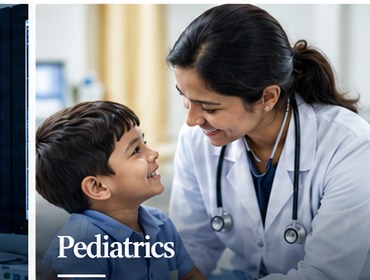
Pediatrics as a career
Pediatrics combines a very large population base with work across outpatient care, acute admissions, newborn care, chronic disease, vaccination and developmental health. Career models range from hospital practice and independent clinics to neonatology, pediatric super-specialties, academics, public health and industry.
Clinical demand
India has about 23.2 million births each year and about 113.7 million children under five. That creates a durable patient base, but demand differs by geography, hospital access, birth rates, referral networks and the availability of pediatric specialists.
Demand source: open source
Work settings
| Setting | Typical role | Main constraint |
|---|---|---|
| Government / public hospitals | District hospitals, CHCs, medical colleges, newborn and child-health programs. | Public-sector demand is high in many regions, but sanctioned posts and infrastructure vary. |
| Private hospitals | Consultant pediatrics, NICU/PICU-linked care and inpatient practice. | Hospital brand, referral flow and intensive-care infrastructure affect economics. |
| Independent practice | Outpatient pediatrics, vaccination, growth and development, common childhood disease. | Location, continuity, parent trust and referral networks are central. |
| Academia / research | Teaching, pediatric trials, epidemiology and child-health research. | Academic progression and publication requirements apply. |
| Pharma / healthtech | Vaccines, pediatric therapeutics, nutrition, medical affairs, digital child-health products. | Industry roles reward evidence interpretation and communication. |
Practice economics
Independent pediatrics can be relatively low-capital compared with imaging or surgery, but revenue depends heavily on outpatient volume, continuity, vaccination/services mix and local competition. NICU/PICU work is more hospital dependent. Public and academic pay is institution specific.
No generic salary range is shown unless a dated source supports the role, geography and sector.
Training capacity
State and college counts are shown only where the source rows can be checked exactly.
Higher-training and focused routes
Eligibility rules can change. The current NMC/NBEMS/NEET-SS bulletin governs formal feeder eligibility.
Research, industry and teaching
AI applications and workflow
AI is being studied for pediatric risk prediction, diagnostic support, EHR review, personalized treatment and workflow. Pediatric datasets are often smaller and more heterogeneous than adult datasets, and developmental and ethical issues make clinician oversight especially important.
Regional variation
State-level child population, fertility, mortality, immunization and nutrition indicators are available from NFHS, SRS and UNICEF. State comparisons use those sources directly rather than applying the national child population to each state.
Disease burden, workforce, infrastructure and private-market conditions are reported separately; one is not used as a proxy for another.
Regional figures: open source
Current openings
Links open external job searches. Listings change continuously.
More current opportunities →